Quadruple Helix Collaboration in Tourism Marketing in Banyuwangi Regency
Kolaborasi Quadruple Helix Dalam Pemasaran Pariwisata Di Kabupaten Banyuwangi
DOI:
https://doi.org/10.21070/jkmp.v14i2.2112Keywords:
quadruple helix, tourism marketing, collaboration, banyuwangi, regional tourismAbstract
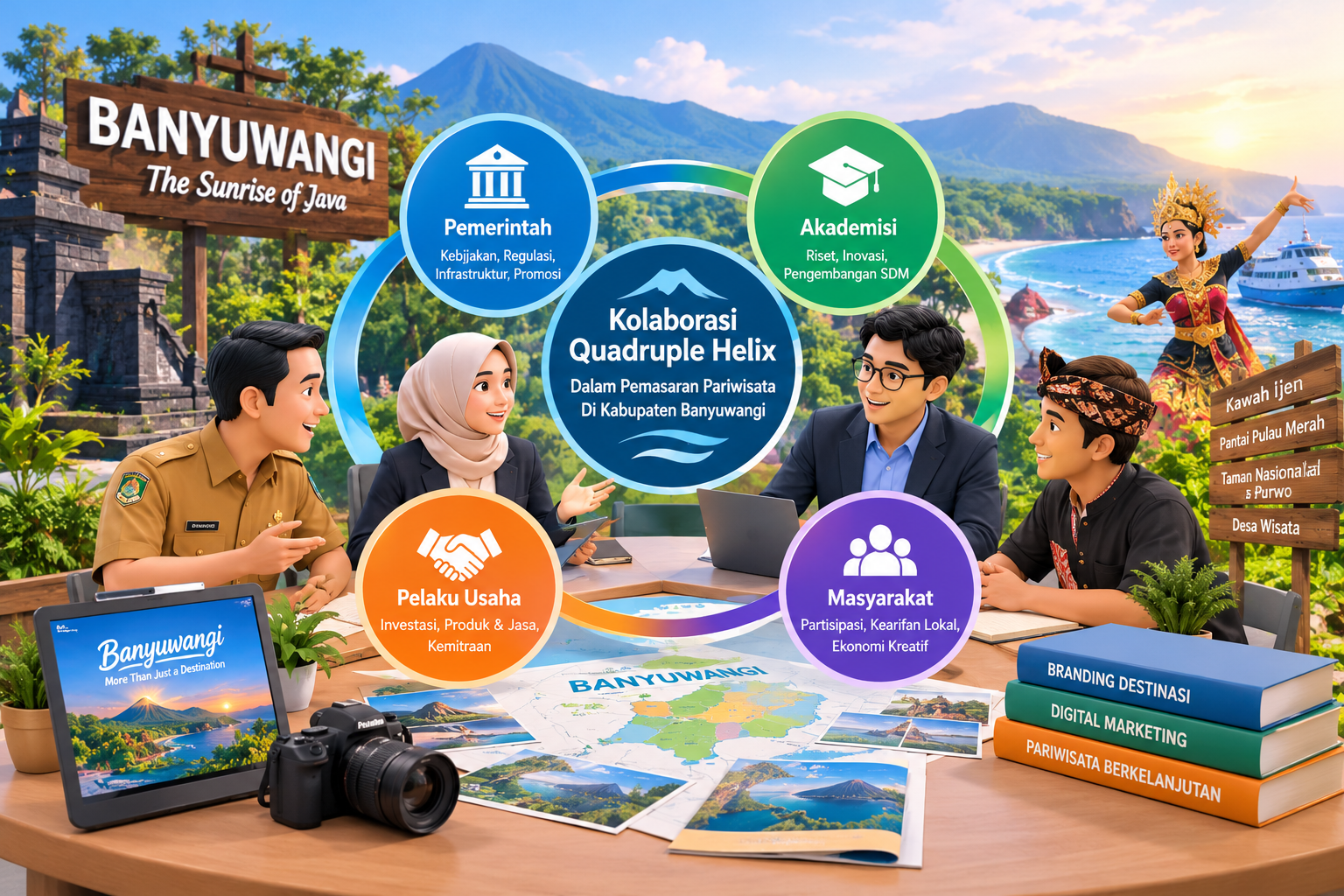
Tourism is a strategic sector in regional development, contributing to economic activity, employment, and local identity. Banyuwangi Regency has developed tourism through natural and cultural attractions, festivals, and digital transformation. However, successful tourism marketing requires collaboration among government, industry, academia, and community actors to integrate resources, knowledge, and public participation. This study aims to analyze Quadruple Helix collaboration in tourism marketing in Banyuwangi Regency by identifying the mechanisms, contributions, and challenges of each actor. Using a library research method, the study reviews scientific literature and documents published during 2021–2026. Data were analyzed descriptively through information extraction, categorization of the four Quadruple Helix actors, thematic coding, and comparative synthesis. The findings show that the government acts as the main policy coordinator and facilitator through destination branding, festivals, and digital promotion. Industry contributes tourism services, packages, and commercial promotion, while academia provides research, innovation, education, and capacity development. The community contributes through tourism village management, cultural preservation, content creation, and experience-based promotion rooted in local identity. Collaboration is flexible and adaptive but remains predominantly government-led, with communication, joint activities, shared objectives, and trust as key mechanisms. Challenges include differences in digital capacity, program synchronization, and limited knowledge integration. The study’s novelty lies in mapping actor relationships, collaboration mechanisms, and contributions to Banyuwangi’s digital tourism marketing. Strengthening digital tourism marketing requires balanced roles, stronger research-policy integration, and continuous improvement of community digital capacity.
References
Abdillah, F., Afiff, A. Z., Hijrah Hati, S. R., & Furinto, A. (2022). A local destination story for the restoration of the destination image affected by Covid-19 crisis: evidence from Indonesia. Heliyon, 8(6), e09784. https://doi.org/10.1016/j.heliyon.2022.e09784
Aliah, N. (2025). The Effectiveness of Digital Transformation in Makassar Tourism Marketing Post-RIPPAR 2022. Jurnal Office: Jurnal Pemikiran Ilmiah Dan Pendidikan Administrasi Perkantoran, 11(2), 260–266.
Alindri, W., Ekowanti, M. R. L., & Trisyani, N. (2024). Pengelolaan Wisata Bahari Melalui Kolaborasi Triple-Helix: Studi Kasus di Pantai Ngliyep, Malang, Indonesia. Jurnal Destinasi Pariwisata, 12(2), 295. https://doi.org/10.24843/JDEPAR.2024.v12.i02.p14
Arditya, D. P., & Adam, M. R. R. (2026). Determinants of visit intention: The role of city branding, tourism events, and city image in Banyuwangi, Indonesia. Ekonomi Digital, 5(2), 99–118. https://doi.org/10.55837/ed.v5i2.216
Badan Pusat Statistik Kabupaten Banyuwangi. (2025). Kabupaten Banyuwangi dalam angka 2025. BPS Kabupaten Banyuwangi
Carayannis, E. G., & Campbell, D. F. J. (2009). “Mode 3” and “Quadruple Helix”: Toward a 21st century fractal innovation ecosystem. International Journal of Technology Management, 46(3/4), 201–234.
Dwi, M. S., Sudirman, R., & Asyriana, S. (2023). Analisis Pengaruh City Branding, Viral Marketing Dan Ewm Terhadap Keputusan Wisatawan Berkunjung Ke Banyuwangi. Analisa: Jurnal Manajemen Dan Akuntansi, 11(1), 45–55. https://doi.org/10.62734/analisa.v11i1.111
Effendi, H., Nurhaida, D., Rezandi, F., Winoto, A., & Wardani, A. P. K. (2025). Digital branding for Curug Luhur: Empowering community-based tourism through social media and content creation. Community Empowerment, 10(11), 2235–2245. https://doi.org/10.31603/ce.15128
Fatin, A. D., Tamrin, M. H., Arieffiani, D., & Wahyudi, A. (2024). Community Empowerment Through Asset-Based Tourism Development: A Case Study Of Romokalisari Adventure Land, Surabaya. JKMP (Jurnal Kebijakan Dan Manajemen Publik), 12(2), 135–147. https://doi.org/10.21070/jkmp.v12i2.1788
Hanggraito, A. A., Ratri, I. N., & Cardias, E. R. (2023). Synchronization of City Branding and Tourist Visit Interest using the Triple Helix Concept. Jurnal Kepariwisataan: Destinasi, Hospitalitas Dan Perjalanan, 7(2), 220–233. https://doi.org/10.34013/jk.v7i2.1359
Haryono, E., Suprihatiningsih, S., Septian, D., Widodo, J., Ashar, A., & Sariman, S. (2024). New Paradigm Metode Penelitian Kepustakaan (Library Research) di Perguruan Tinggi. An-Nuur, 14(1). https://doi.org/10.58403/annuur.v14i1.391
Isnaeni, F., & Yucha, N. (2025). Strategi Branding Digital Untuk Desa Wisata Di Banyuwangi Berbasis Pendekatan Partisipatif Dan Inovasi Lokal. Semeru: Jurnal Pengabdian Kepada Masyarakat, 2(1), 188–196. https://doi.org/10.55499/semeru.v2i1.1548
Misbar, A., & Novianti, D. (2024). Model Quadruple Helix dalam Pengembangan Desa Wisata Edukasi Omah Jamu Yogyakarta. Syntax Literate ; Jurnal Ilmiah Indonesia, 9(6), 3493–3507. https://doi.org/10.36418/syntax-literate.v9i6.15393
Musleh, M., Subianto, A., & Prasita, V. D. (2023). Stakeholder Interaction in the Development of Oxygen Ecotourism on Gili Iyang Island, Indonesia. Journal of Government and Civil Society, 7(2), 297–323. https://doi.org/10.31000/jgcs.v7i2.8251
Nguyen, T. Q. T., Dong, X. D., & Ho, T. (2021). Stakeholder Involvement in Destination Marketing: A Network Analysis of two Destinations in Vietnam. Tourism and Hospitality Management, 27(1), 189–203. https://doi.org/10.20867/thm.27.1.11
Patadjenu, S., Silitonga, M. S., & Asropi, A. (2023). Tata Kelola Kolaboratif Pengembangan Pariwisata Likupang, Kabupaten Minahasa Utara. Jurnal Kepariwisataan Indonesia: Jurnal Penelitian Dan Pengembangan Kepariwisataan Indonesia, 17(1), 23–48. https://doi.org/10.47608/jki.v17i12023.23-48
Pemerintah Kabupaten Banyuwangi. (2024). Banyuwangi Festival 2024. Pemerintah Kabupaten Banyuwangi.
Pemerintah Kabupaten Banyuwangi. (2024). Laporan penyelenggaraan pemerintahan daerah Kabupaten Banyuwangi tahun 2024. Pemerintah Kabupaten Banyuwangi.
Pemerintah Kabupaten Banyuwangi. (2024). BEC dan Gandrung Sewu Banyuwangi kembali masuk Kharisma Event Nusantara 2024. Pemerintah Kabupaten Banyuwangi.
Perkins, R., Khoo-Lattimore, C., & Arcodia, C. (2021). Collaboration in marketing regional tourism destinations: Constructing a business cluster formation framework through participatory action research. Journal of Hospitality and Tourism Management, 46, 347–359. https://doi.org/10.1016/j.jhtm.2021.01.004
Perkins, R., Khoo, C., & Arcodia, C. (2022). Stakeholder contribution to tourism collaboration: Exploring stakeholder typologies, networks and actions in the cluster formation process. Journal of Hospitality and Tourism Management, 52, 304–315. https://doi.org/10.1016/j.jhtm.2022.07.011
Prasetia, A. R. (2026). Strategic Management of Digital Tourism Marketing for Destination Management Organization Governance in Indonesia. Mercatura : Journal of Marketing, 2(1), 33–51. https://doi.org/10.61978/mercatura.v2i1.1386
Ratuloly, R., Rifa’i, M., & Hardianto, W. T. (2023). One Village One Development: A Government Concept in The Development of The Tourism Sector in Batu City. JKMP (Jurnal Kebijakan Dan Manajemen Publik), 11(1), 38–47. https://doi.org/10.21070/jkmp.v11i1.1739
Rezqy, V. O., & Fikriyah, K. (2022). Peran Quadruple Helix Dalam Pengembangan Pariwisata Halal di Kawasan Wisata Cisarua-Lembang. Jurnal Ekonomika Dan Bisnis Islam, 4(3), 15–30. https://doi.org/10.26740/jekobi.v4n3.p15-30
Shyiramunda, T., & van den Bersselaar, D. (2024). Local community development and higher education institutions: Moving from the triple helix to the quadruple helix model. International Review of Education, 70(1), 51–85. https://doi.org/10.1007/s11159-023-10037-7
Wijayati, E., Yuniningsih, T., & Djumiarti, T. (2025). Jaringan aktor dalam pengembangan pariwisata Desa Wisata Gogik Kecamatan Ungaran Barat Kabupaten Semarang. Journal of Management and Public Policy, 13(3), 425–443. https://doi.org/https://doi.org/10.14710/jppmr.v13i3.45076
Wilujeng, S., Puspaningrum, D., Mustapit, & Subekti, S. (2026). Peran Quadruple Helix dalam upaya pengembangan Desa Wisata di Desa Rowosari Kecamatan Sumberjambe Jember. Journal of Regional and Rural Development Planning, 10(2), 84–94. https://doi.org/https://doi.org/10.29244/jp2wd.2026.10.2.84-94
Wirata, G., Handayani, M. M., & Desy Geriadi, M. A. (2023). Kebijakan pengembangan ecowisata berbasis komunitas di Indonesia: sebuah pendekatan quadruple helix. JPPI (Jurnal Penelitian Pendidikan Indonesia), 9(4), 16. https://doi.org/10.29210/020232239
Wiyono, S. T., Lilik Ekowanti, M. R., Supartono, & Djoko Siswanto Muhartono. (2024). Ecotourism Development Model in Indonesia: Quintuple Helix Inter-Organizational Collaboration Perspective. Social Science and Humanities Journal, 8(2), 34493–34502. https://doi.org/10.18535/sshj.v8i02.936
Downloads
Published
License
Copyright (c) 2026 Moh. Rizqi Kurniawan, Erna Agustina, Niko Pahlevi Hentika

This work is licensed under a Creative Commons Attribution 4.0 International License.